Thursday, 4 September 2014

Developing Stop Motion Animation

George Pal was born on February 1st 1908 in Hungary was and an animator and film producer. From 1931-1933 he worked on patenting Pal-Doll, a series of puppet films made using hand carved wooden puppets. He made multiple adverts for Phillips and Horlicks Malted Milk before he began work for Paramount Pictures. Being an animator, he made the 'Puppetoons' series in the 1940's, each Puppetoon needed almost 9000 individually carved wooden figures or faces.
Despite their ever growing popularity due to financial issues, it wasn't possible to continue with the series and it was cut short in 1939. Pal also used the Puppetoon name to create characters in a selection of his live action feature films towards the start of his live action career.

Developing Stop Motion Animation

Willis O'Brien was an American special effects artist for motion pictures, born on March 2nd 1886 in Oakland. During his teenage years he started to make models of dinosaurs and cavemen and with the help of a local newsreel cameraman he animated them. Herman Wobber, a San Francisco exhibitor, saw his short film and in 1915 he helped fund the production of 'The Dinosaur and the Missing Link; A Prehistoric Tragedy'
In 1925 'The Lost World', was released, in this sequence clay models of dinosaurs were added to live action footage used to show the adventure of two explorers finding living dinosaurs in the South of America. This was the first feature length film made in the United States that featured model animation.
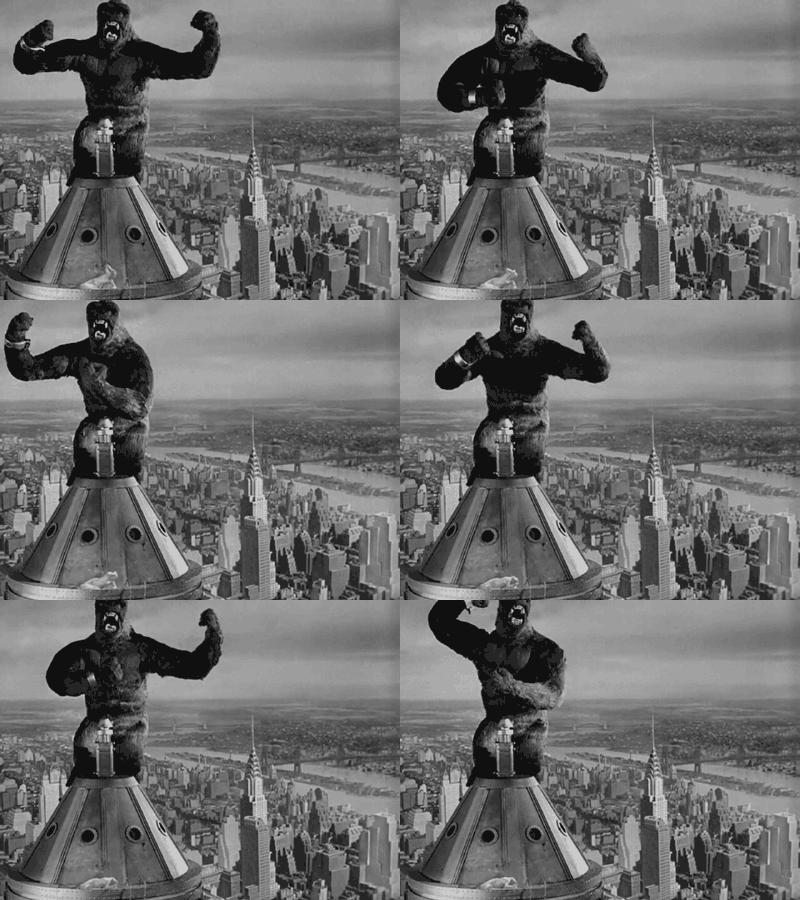
He later developed King King in 1933, which told the story of a prehistoric ape named Kong who attempts to possess a young woman and dies in the process. It was a Hollywood hit, its often said to be 'one of the most iconic movies in the history of cinema'.

Developing Stop Motion Animation

Emile Cohl was a French animator, born on January 4th 1857, who brought stop motion animation to America, he used drawings, puppets and other inanimate objects to create his stop motion films. As a teenager he discovered Guignol puppet theater, Fantoche and caricature, this was a form of drama where all the characters involved are puppets of marionettes.
In his 50's Chol found work at 'Gaumont', a mini-major film studio, during his time there he collaborated other directors, learning cinematography from Arnaud and how to direct comedies, 'fairy pieces' and pageants, despite all this, his specialty was animation. He was asked by his boss to figure out the mystery of 'The Haunted Hotel', Chol studied the film frame by frame and in this way discovered  the basic techniques of animation.
His first animated film was titled 'Fantasmagorie', it was released in 1908 and used 700 of his drawings, all individually photographed to create the animated sequence lasting two minutes. This was considered the first fully animated film ever made

Developing Stop Motion Animation

The first example of stop motion animation was created by Albert E. Smith and Stuart Blackton.
Blackton was born on January 5th 1875 in Sheffield and was a film producer and director of silent film. He worked for most of his life as an illustrator whilst producing, directing, writing and starring in his own films. Whilst working for the 'New York Evening World' he was sent to interview Thomas Edison about his Vitascope, it was suggested that Blackton and Smith buy a print of the films, as well as nine others and a Vitascope.
Albert was born on June 4th 1875 in Kent, and was a stage magician, film director and producer, in 1897 he founded 'Vitagraph Studios' with his partner, James Blackton.
In 1898 'The Humpty Dumpty Circus' was created, it was the first of its kind, in this film a toy circus of acrobats and animals come to life with the kelp of jointed limbs and stands. This animation has since been lost, and now only the ideas and information about the short film are available.

Developing Stop Motion Animation

In March of 1895, Charles Francis Jenkins and Thomas Armat made an agreement, their aim was to develop a motion picture device. Jenkins had already invented a device for viewing motion pictures, the Phantoscope, a device similar to the Edison Kinetoscope. Because of his knowledge with motion pictures, he and Armat were able to create a version of the Phantoscope that projects its short films.
Despite them working well together the pair split, and Armat took the device to Edison, with the intention that he would develop the machine.
Edison agreed and in he February of 1869, the projecting Phantoscope was given a new name, the Vitascope. With the quick success of the device, other competitors started to develop their own projection systems in American theaters

Developing Stop Motion Animation

Auguste Lumiere was born on October 19th 1862 and Louis Lumiere, born October 5th 1864, were brothers from France who are credited to be the first filmmakers in history. Together they patented the Cinematograph, a motion picture film camera, which was also used as a film projector in the early 1890's. Together they then created their first film 'Sortie de l'usine Lumiere de Lyon' in 1894, it was shown at the worlds first and oldest cinema in the September of 1894. They created numerous films, each one is 17 meters long, which when manually put through the projector, runs for about 50 seconds.

Developing Stop Motion Animation

Charles-Emile Reynaud was born on December 8th 1844 in Montreuil and was a French inventor, responsible for the first animated cartoons. In 1877 he created the Praxinoscope, an animation device much more advanced than the Zoetrope. It was similar to the Zoetrope in that i used a strip of images that had been altered slightly, but instead of having small slits around the outside, it had an inner circle, made up solely of mirrors, placed so the reflection was brighter and less distorted than that of a Zoetrope.
Then, in 1888 Reynaud developed he Theatre Optique, an improved version of his Praxinoscope that was capable of projecting images onto a screen from a longer roll of pictures. This allowed him to show hand drawn animated cartoons to larger audiences.